Rock Band Simulator Concerts at 21:00
Choose the next song, read the crowd, and know when to walk off.
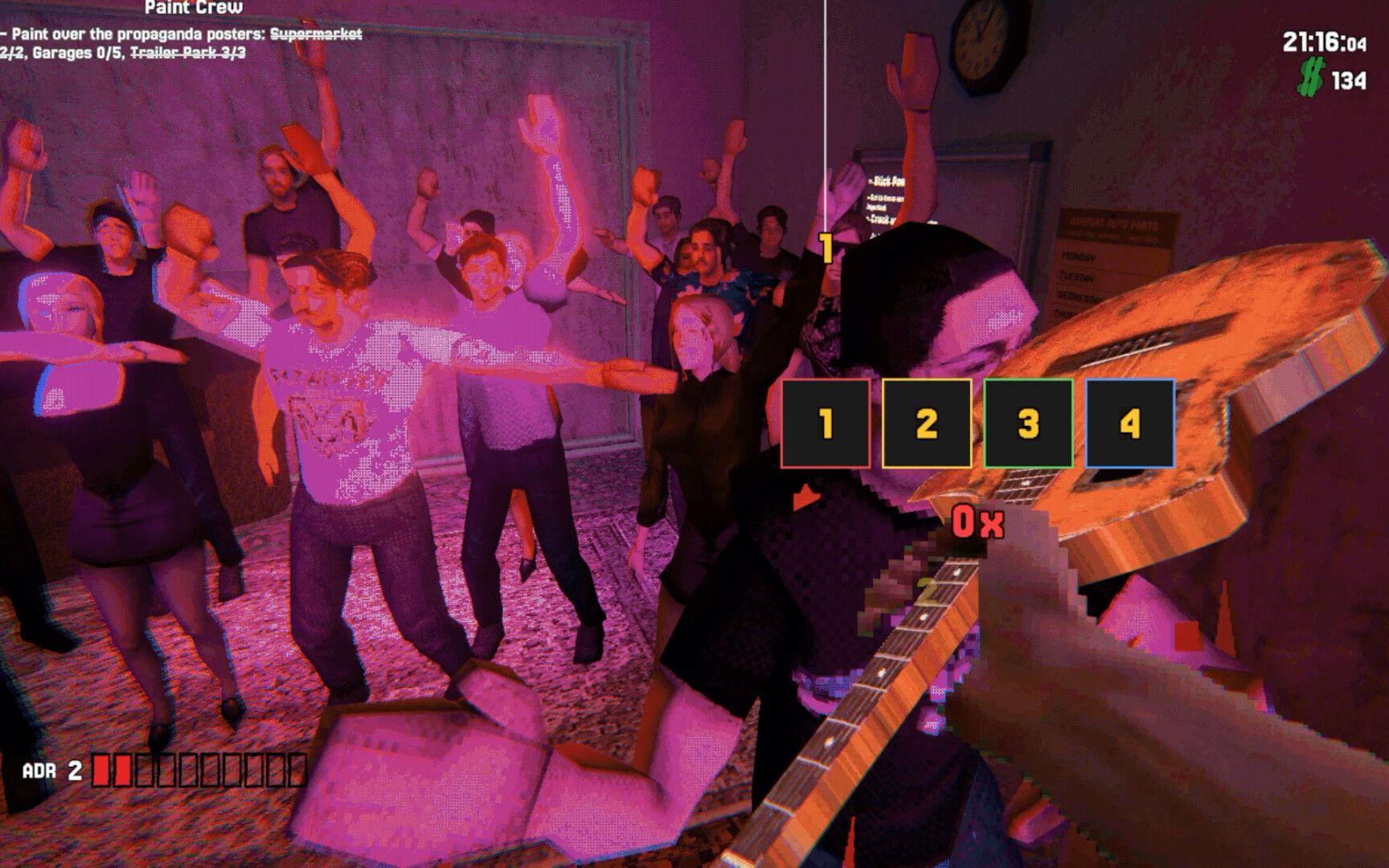
Concerts are the heartbeat of Rock Band Simulator. Whatever chaos Ashport throws at you during the day — odd jobs, blackjack, shady errands, ADR fights — the band still takes the stage at 21:00. This guide explains how rhythm gigs work, how to choose what comes next, how to read crowd flow, when to end the set, and how performances feed reputation and later endings.
Prep systems live elsewhere: Getting Started for night-one readiness, Garage Upgrades for gear that makes timing easier, and ADR Combat for keeping your hands alive until showtime. Week pacing sits in the Seven-Day Walkthrough.
What a concert actually is
A Rock Band Simulator concert is not a fixed on-rails track list you simply survive. You perform in a rhythm-based mode where you:
- Hit timing windows while the band plays
- Choose what comes next as the set develops
- React to how the crowd is moving
- Decide when to call it a night
A good gig builds reputation. A bad one gives Evgen and Diman something to argue about on the way home. Both outcomes matter for the week ahead.
Pre-show checklist (do this every night)
- Bandmates present. Evgen (bass) and Diman (drums) need to be there and functional. Missing members turn the night into damage control.
- Gear ready. Critical amp and instrument issues should already be fixed. Cosmetic garage wins do not replace a working setup.
- Hands healthy. If you brawled earlier, confirm you can still play. Protecting hands is a concert strategy — see ADR Combat.
- Head clear enough. Beer, cigarettes, and other substances affect condition. A little might fit the fantasy; too much can wreck timing and decision quality.
- Intent for the set. Decide whether you need a reputation spike, a safe consolidation night, or a short set because the day already went sideways.
If any of those five fail, fix them before you romanticize the stage dive.
Setlist choice and pacing
Think of the set as a conversation with the room, not a checklist.
Opening. Start with something that establishes energy without demanding perfect execution while you are still settling nerves. An opener that is slightly easier but crowd-friendly often beats a technical flex that dies in the first minute.
Middle. This is where you steer. If the crowd is lifting, chain songs that keep hands in the air. If the room is flat, change tempo or mood instead of repeating the same failed idea. The game asks you to choose what comes next — use that agency.
Peak. Watch for the stretch where the front of the stage is actually moving with you. That is when ambitious choices pay. Pushing peak material into a dead room just advertises that you are not listening.
Close. Ending cleanly is a skill. Walking off while the room still wants more often beats draining the tank until applause turns into coughs and arguments.
Reading crowd flow
Crowd flow is your primary feedback channel during the gig:
- Rising energy — people up front reacting, motion increasing. You can take risks and extend.
- Stable energy — hold the line; small adjustments, not panic swaps.
- Falling energy — change direction or prepare to end. Doubling down on a sinking vibe usually deepens the hole.
- Chaotic spike — fun, but check whether you can still land timing. Chaos without control becomes a reputation tax.
Do not only stare at your own hands. The fantasy is a live room; play to it.
When to end the set
Call the night when one of these is true:
- You just peaked and the next option looks weaker than the memory you would leave.
- Timing is degrading because of fatigue, substances, or earlier injuries.
- The crowd is cooling and you lack a reliable recovery song.
- Bandmate stability is slipping and another song risks a public meltdown.
- You already secured the reputation goal you needed for the day.
Overstaying is a common failure mode. Players treat longer as better. In Ashport, cleaner is better. A short strong set beats a long collapse that feeds the ride-home fight.
Reputation impact
Reputation is the long currency of the week. Strong shows open better social footing, smoother midweek opportunities, and healthier ending branches. Weak shows compound: worse moods, sharper arguments, and less slack when day six goes wrong.
Daytime choices still matter — you cannot fully separate hustle from stage — but concerts are the loudest lever. If you are chasing a better ending, protect your nightly average more aggressively than you protect blackjack thrills. See the Endings Guide for how reputation combines with relationships.
Gear and performance quality
Better equipment is the most direct mechanical path to cleaner shows. Fix the amp early. Upgrade instruments and stage-critical pieces before you sink cash into vanity. Posters, vinyl, and social following feel great in the garage and support the fantasy of growth, but they do not replace timing windows. Full spend order: Garage Upgrades.
Linking concerts to the rest of the day
Use the clock backwards:
- By late afternoon you should know whether tonight is a push night or a safe night.
- Risk jobs belong earlier so injuries have time to resolve.
- Bandmate errands are concert prep, not optional flavor.
- Blackjack after a win streak is still gambling; do not donate the string budget at 20:40.
The Seven-Day Walkthrough explains how this changes from early week to late week. Early nights teach systems. Late nights punish arrogance.
Practical concert rules of thumb
- Listen to the room before you impress yourself.
- Change the plan when energy falls; do not ego through it.
- End on a high when you can.
- Never arrive with wrecked hands if you had a choice.
- One great midweek show is worth more than three messy ones you “almost” saved.
After the show
Check reputation movement, bandmate mood, and whether any gear broke under stress. Tomorrow’s plan should react to tonight: repair, apologize, capitalize, or rest the fists. Then return to Ashport’s daytime loop knowing the next 21:00 is already on the calendar.
Master the concert loop and the rest of Rock Band Simulator becomes manageable chaos. Fail the loop and even perfect can collecting will not make Evgen and Diman believe the band is going anywhere.
Frequently Asked Questions
Quick answers about surviving Ashport and making the 21:00 show.
What time are concerts?
Every night at 21:00. The show arrives whether your day went clean or sideways — prep early.
Can I choose the setlist freely?
You choose what comes next during the performance and decide when to end the night. Treat it as live pacing, not a fixed menu you clear completely.
How do concerts affect reputation?
Strong gigs raise reputation; weak gigs create fallout and arguments. Reputation feeds midweek opportunities and ending quality.
Should I fight right before a show?
Avoid optional fights. Injured hands hurt timing and can ruin the night. Read ADR Combat for forced encounters.
What upgrades help concerts most?
Critical performance gear first — especially amp and instrument readiness — before cosmetic garage items. See Garage Upgrades.